

Communicating with Your Designer: Turning Ideas into Reality

Updated: Apr 7

Design is more than colors, fonts, and layouts, it’s a conversation. The better you communicate with your designer, the closer the final result will be to your vision. Whether you’re working on a website, a logo, or a backdrop for an event, clear communication is the key to success.
1. Start with Your Goal, Not Just the Item
You don’t need to know whether you want a poster, a banner, or something else, what matters most is what you want to achieve.
Ask yourself:
What message or feeling do I want to convey?
Who is this design for?
What outcome am I hoping for?
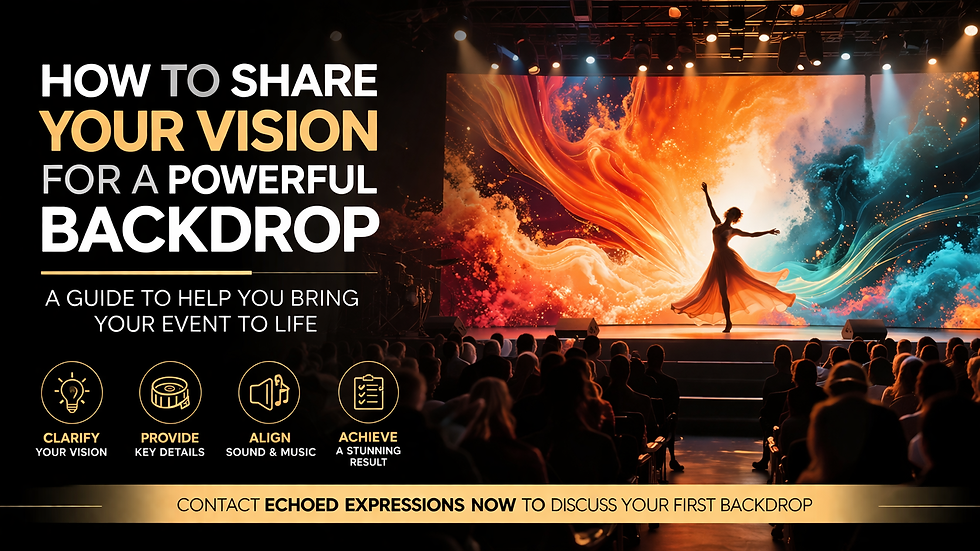
Even if you’re unsure about the exact format, we at Echoed Expressions can guide you. Once we understand your goal, we can suggest the right type of design and bring your vision to life.
2. Provide a Clear Brief and Key Assets
For a project to succeed, it’s crucial to come prepared with:
A client brief outlining your business or brand
Your image, purpose, and goals
Any existing logos, branding elements, or set pieces
Having these ready ensures that your designer can create a design that is consistent, professional, and aligned with your brand identity. The clearer the information, the smoother the process.
3. Nothing is Fixed – Everything Can Be Customized
While posters, banners, and other designs have standard sizes, everything can be custom-made to fit your needs. All you have to do is express your desire, we’ll ask the right questions to bring your vision to life.
Clients should come to meetings prepared, if possible, with:
Reference images or inspirations
Basic ideas or concepts
Information on the target audience and the goal of the design
The more information you provide, the easier it is for your designer to create something tailored to your objectives.
4. Use References and Examples
Images, videos, or links to designs you like (or dislike) are powerful tools. They help your designer understand your taste without needing a design vocabulary. A picture can say a thousand words.
5. Be Honest and Specific
When reviewing designs, be clear about what works and what doesn’t. Instead of “I don’t like it,” try:
“The colors feel too bright for our brand.”
“I want something more modern and minimalistic.”
Specific feedback saves time and prevents unnecessary revisions.
6. Trust the Expert
Your designer brings expertise you might not have. Listen to their suggestions, they know what works visually and technically. Collaboration works best when you combine your vision with their professional insight.
7. Keep Communication Continuous
Design is iterative. Regular check-ins, even brief ones, help ensure the project stays on track. Don’t wait until the final stage to give feedback, small adjustments along the way make a huge difference.
Patience remains the key, as no design turns out the perfect the first time.
8. Respect Time and Boundaries
Clear communication also means respecting deadlines and the designer’s process. Provide feedback promptly, and be mindful of scope changes, this keeps the project moving smoothly.
Bottom line: Great design starts with great communication. Be honest, clear, and prepared. Provide your brief, key assets, and goals, and even if you’re unsure of the exact format, sharing your vision is enough to get started. Together, you and your designer can turn your ideas into something extraordinary.
Ready to bring your ideas to life? Contact Echoed Expressions now to discuss your next project and start the creative journey!
Echoed Expressions


Comments